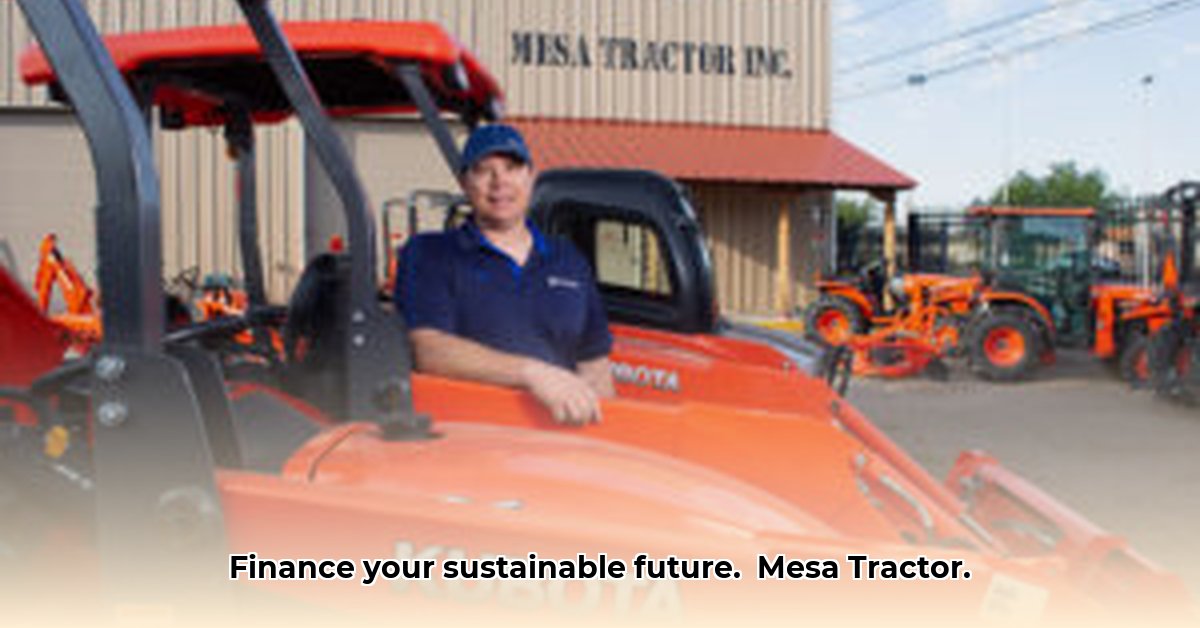
Thinking about upgrading your farm equipment? Securing the right financing can be the difference between a thriving operation and one struggling to keep up. Mesa Tractor Albuquerque offers various financing options, and understanding their implications is key to building a sustainable and profitable farm. This article delves into the details, exploring the advantages and disadvantages of their financing model within the broader context of sustainable agriculture. For more options, explore other tractor financing options.
Understanding Mesa Tractor Albuquerque's Financing Options
Mesa Tractor Albuquerque, like many agricultural equipment dealerships, offers financing plans designed to help farmers acquire the tools they need. These plans often include attractive features like zero-down payment options, making immediately acquiring that new tractor or harvester a tempting proposition. However, it's crucial to carefully consider the long-term consequences. These zero-down deals typically spread payments over an extended period, sometimes up to 84 months. While this initially lowers the barrier to entry, the implications of such a long-term loan are significant.
Imagine a scenario where a farmer diligently plants, nurtures, and harvests their crops, only to face a sizable debt burden. This extended repayment schedule could hinder reinvestment in future seasons, jeopardizing the farm's ability to adapt to fluctuating market prices or unexpected challenges like a poor harvest. It's a double-edged sword: access to advanced equipment versus long-term financial commitment.
Let's consider the advantages and disadvantages in more detail:
| Advantage | Disadvantage |
|---|---|
| Immediate access to equipment | Potential for substantial long-term debt |
| Improved farming efficiency | Increased financial risk during economic downturns |
| Opportunity to adopt new technologies | Potential equipment obsolescence before loan completion |
| Easier budgeting with predictable monthly payments | Higher total interest paid over the loan's lifetime |
Navigating the Risks and Opportunities in Sustainable Farming
Sustainable farming practices aren't just a trend; they're vital for the long-term health of our planet and the agricultural sector. Mesa Tractor Albuquerque's financing options can play a role in supporting this transition, but they are only one piece of a much larger puzzle. Smart financial planning is paramount.
The initial cost of new equipment is only part of the equation. Consider the long-term reliability of income streams. Will crop yields consistently cover loan payments? What happens if market prices plummet or a blight affects a crucial crop? These are crucial questions to contemplate when assessing the true cost of acquiring new equipment.
Technological advancements further complicate this assessment. Agricultural technology is constantly evolving. Will your new equipment remain state-of-the-art for the duration of your loan? Or will newer, more efficient models render your investment technologically and economically obsolete long before the loan is paid off?
However, there are factors working in farmers' favor. Government programs often offer subsidies and incentives to promote sustainable agricultural practices, potentially mitigating some of the financial burden. But reliance on these alone isn't a sustainable strategy. Diversification of income streams and a robust contingency fund for lean seasons are crucial for resilience.
Equipment manufacturers also have a part to play. Creating equipment with longer lifespans and reduced environmental impact is key to long-term sustainability. Farmers should prioritize durable, efficient machines with eco-friendly features when making purchasing decisions.
The Environmental Footprint: Balancing Progress and Sustainability
The environmental impact of agricultural equipment manufacturing is substantial. Extended financing can prolong the use of less-efficient models, potentially counteracting the goals of sustainable agriculture. Striking a balance between acquiring necessary equipment and minimizing environmental impact requires careful consideration.
The lifecycle of agricultural equipment—from manufacturing to disposal—must be thoroughly assessed. Farmers should inquire about the materials used in construction, the recyclability of components, and the overall environmental footprint of the equipment they're considering. Choosing less environmentally damaging equipment is a significant step toward sustainable farming.
Steps to Mitigate Environmental Risks of Long-Term Agricultural Equipment Financing
Assess Equipment Lifespan: Determine the projected lifespan of the equipment in relation to technological advances. Will it become environmentally inefficient within a few years? (Consider leasing as an alternative for flexibility, reducing the risk of obsolescence).
Evaluate Environmental Impact: Analyze the complete lifecycle – manufacturing, use, and disposal. Are there more eco-friendly alternatives available?
Explore Sustainable Financing Options: Inquire about lenders supporting sustainable agricultural practices, along with any available incentives or programs for environmentally friendly equipment.
Plan for Equipment Upgrades: Incorporate equipment upgrades into your long-term financial plan; this enables replacement of outdated and less efficient machinery.
Consider Leasing: Leasing offers flexibility, allowing you to upgrade more frequently to newer, more efficient models.
The Future of Sustainable Equipment Financing
The future of agriculture hinges on mitigating the environmental impact of farming practices. This requires not only the development of more efficient, eco-friendly farming equipment but also financing models that actively support sustainable choices. Farmers, lenders, and policymakers must collaborate to create a comprehensive system. A transition towards long-term, sustainable financing options can reduce the environmental burden and strengthen the resilience and profitability of the agricultural sector. By making informed decisions today, farmers can secure a sustainable future for their operations and for the planet.